Modern vehicles may be built with steel panels, aluminum panels, or a combination of both. Although these materials can look identical beneath the paint, they do not always respond the same way when dented. Their different properties can affect how a technician evaluates the damage, selects tools, and approaches the repair.
For drivers considering paintless dent repair, understanding the difference between steel and aluminum helps explain why two similar-looking dents may require different amounts of time, effort, and precision.
Why Automakers Use Different Panel Materials
Steel has long been the most common material used for vehicle body panels. It is strong, widely available, and relatively economical to manufacture. Many doors, fenders, roofs, quarter panels, and other exterior components continue to be made from steel.
Aluminum is lighter than steel, which can help automakers reduce a vehicle’s overall weight and improve efficiency. It is commonly found on certain luxury vehicles, performance models, electric vehicles, trucks, and newer vehicle designs. Some vehicles use aluminum for only a few exterior panels, while others incorporate it more extensively.
The material cannot always be identified simply by looking at the vehicle. A technician may consider the make, model, panel location, and manufacture specifications before beginning the repair.
How Steel Panels Respond to Dents
Steel panels generally have a degree of flexibility and “metal memory,” meaning the material may tend to move back toward its original shape when carefully manipulated. During mobile paintless dent removal, a technician applies controlled pressure in small increments while closely monitoring the panel’s surface.
However, not every steel-panel dent behaves the same way. Repair complexity can be affected by:
- The depth and shape of the dent
- Whether the metal has been stretched
- The dent’s proximity to an edge or body line
- Access behind the damaged area
- The condition of the factory paint
Steel may be more forgiving in certain situations, but successful repair still requires specialized tools, patience, and a detailed understanding of how the metal moves.
How Aluminum Panels Respond Differently
Aluminum does not have the same characteristics as steel. It is lighter and does not respond to pressure precisely the same way. Once dented, aluminum may require more effort and carefully controlled manipulation to restore its original contour.
Greater Sensitivity During Repair
An aluminum panel may react more quickly to pressure in one area while remaining resistant in another. The technician must carefully read the panel and make gradual adjustments to avoid creating high spots or disturbing the surrounding metal.
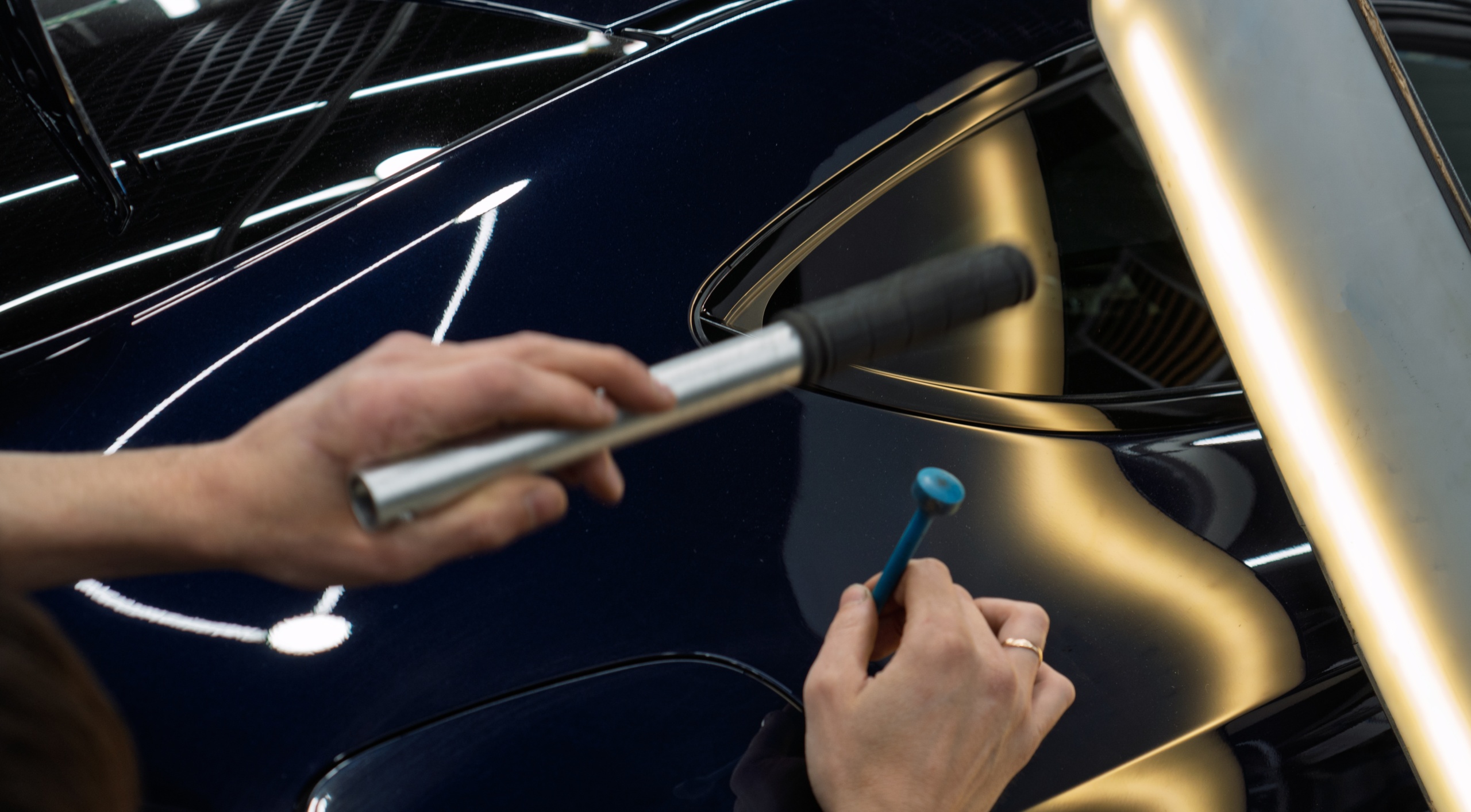
Specialized lighting helps reveal subtle changes in the panel’s reflection throughout the process. Drivers can view Un-Dent’s completed dent repair work to see examples of the precision involved in restoring damaged vehicle surfaces.
Specialized Tools and Techniques
Aluminum PDR may require tools, techniques, and temperature management suited to the material. The amount of access behind the panel also remains important. Reinforcement structures, trim, wiring, and tightly enclosed areas can make repair more complex regardless of whether the panel is aluminum or steel.
Does Panel Material Determine Whether PDR Will Work?
Panel material is only one part of the assessment. Both steel and aluminum dents may be suitable for PDR when the paint remains intact, and the metal has not been excessively stretched or sharply damaged.
A technician will also evaluate the dent size, depth, location, impact angle, and previous bodywork. The paintless dent repair FAQ provides additional information about the types of damage that may be repairable.
Professional Assessment Matters
Because steel and aluminum behave differently, the repair approach should be tailored to the individual panel rather than based on the dent appearance alone. Un-Dent Inc. provides professional mobile dent repair throughout Port St. Lucie, Stuart, Martin County, and St. Lucie County.
For a free estimate, contact Un-Dent Inc. or call or text 772-979-0468. Appointments are available Monday through Saturday from 8:00 a.m. to 8:00 p.m. Their website is https://undentinc.com.