Two dents may appear nearly identical from the outside, yet the repair process can be very different depending on where each dent is located. A small dent in the center of a door may provide relatively straightforward access, while one near an edge, body line, brace, or tightly enclosed panel may require a more specialized approach.
When evaluating a vehicle for paintless dent repair, a technician considers more than the dent’s diameter. Its precise location, depth, shape, surrounding structure, and the condition of the paint all help determine the best way to restore the panel.
Why Panel Location Matters
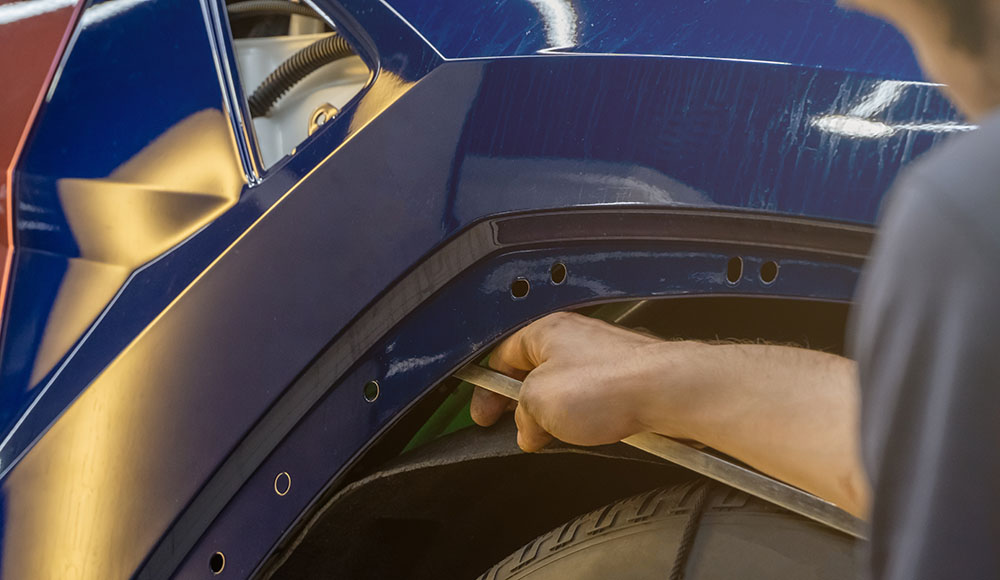
Paintless dent repair works by carefully reshaping the vehicle’s metal without sanding, filling, or repainting the damaged area. In many cases, specialized tools are used to reach behind the panel and gradually massage the metal toward its original position.
However, vehicle panels are not equally accessible. Interior trim, reinforcement bars, wiring, insulation, and other components may sit behind the damage. The panel’s curvature and proximity to an edge can also affect how the metal responds during the repair.
Drivers can view examples of completed dent and ding repairs to see how dents in different areas may be restored while preserving the vehicle’s existing finish.
Dents on Vehicle Doors
Doors are among the most common locations for dents, especially those caused by nearby vehicles in parking lots. Although a door offers a broad exterior surface, its interior contains several components that can influence access.
Internal Door Components
A technician may need to work around:
- Side-impact reinforcement beams
- Window glass and operating mechanisms
- Wiring for locks, mirrors, and speakers
- Interior handles and trim
- Factory sound-deadening material
A dent located in an open section of the door may be easier to reach than one positioned directly over a reinforcement beam. Careful evaluation helps the technician determine whether traditional tool access or another PDR technique is appropriate.
Fender Dent Repair
Fenders often provide favorable access because certain areas can be reached from underneath or through existing openings. Nevertheless, a dent close to the wheel arch, panel edge, or pronounced contour may be more challenging.
The curved shape of a fender affects how force travels through the metal. Restoring that shape requires controlled pressure and close visual monitoring. This precision is one reason professional mobile paintless dent removal involves much more than simply pushing outward on the center of a dent.
Quarter Panels and Limited Access
Quarter panels are fixed parts of the vehicle’s body rather than removable or hinged panels. Their enclosed construction can make access behind a dent more limited. Interior liners, trunk trim, braces, and structural sections may stand between the technician and the damaged area.
In some situations, alternative PDR methods may be considered when safe access behind the metal is unavailable. The appropriate method depends on the specific vehicle and the condition of the panel.
Dents Along Body Lines and Panel Edges
Body lines are the defined ridges and contours that give a vehicle its shape. Because these areas are intentionally formed and often more rigid, a dent along a body line may require additional precision.
Panel edges can present similar challenges. Metal near an edge has less surrounding material to distribute pressure, and access may be restricted by folded seams or bonded sections. The technician must gradually restore both the dent and the panel’s original contour.
Every Dent Requires an Individual Assessment
A photograph can provide helpful preliminary information, but an in-person evaluation offers a clearer view of the dent depth, location, paint condition, and surrounding panel structure. Un-Dent Inc. provides professional mobile service throughout Port St. Lucie, Stuart, Martin County, and St. Lucie County.
To learn more about what to expect, visit the paintless dent repair FAQ or browse the latest vehicle dent repair information.
For a free estimate, contact Un-Dent Inc. or call or text 772-979-0468. Mobile appointments are available Monday through Saturday from 8:00 a.m. to 8:00 p.m. Their website is https://undentinc.com.