Not Every Dent Can Be Fixed the Same Way
Paintless dent repair (PDR) is an excellent solution for many types of dents—but not all damage is suitable for the technique. Some dents are perfect candidates for PDR, while others require traditional bodywork due to paint damage, sharp creases, or stretched metal. Understanding which dents are repairable helps drivers know what to expect before scheduling an appointment. For cases that qualify, services like paintless dent repair offer fast, clean, and highly effective results.
Dents With Intact Paint Are the Best Candidates
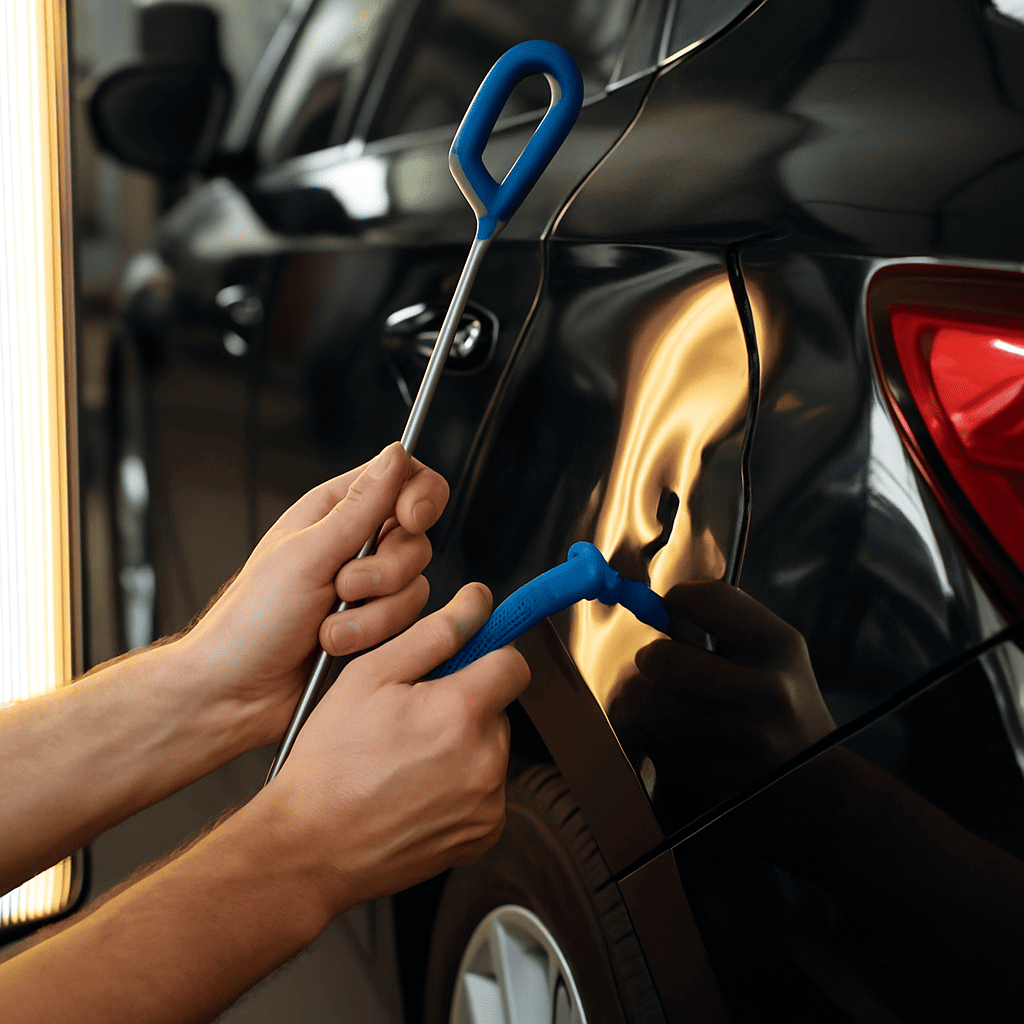
PDR works by gently manipulating the metal panel from behind (or using glue pulling from the front) to restore the original shape. Because of this, paint conditions play a major role in eligibility. If the paint is cracked, chipped, or missing, PDR cannot be used alone because the process will not correct the paint damage.
The Best Dents for PDR Have:
- No cracked or broken paint
- Smooth, shallow edges
- Minimal stretching of the metal
- Accessible locations on the panel
These conditions allow technicians to reshape the metal without altering the exterior finish. For repairs involving intact paint, Un-Dent’s PDR process is the ideal solution.
Shallow Dents Repair More Easily Than Deep Ones
Depth is another key factor in determining whether PDR will work. Shallow dents that haven’t stretched the metal too far are generally the easiest to repair. Deep dents, even with undamaged paint, may still be challenging because the metal may have overstretched or creased.
Factors Technicians Evaluate
- The curvature of the dent
- How far the metal has been pushed inward
- The sharpness of the impact
- Whether the dent affects body lines
A skilled PDR technician evaluates depth carefully before recommending a repair method.
Creases and Sharp Dents Require Special Attention
Crease dents—long, narrow indentations—are more complex because the metal has been displaced unevenly. Many creases are repairable with PDR, but only when the paint remains intact and the metal has not overstretched. Sharp dents caused by pointed objects are more challenging and may only be partially repairable.
When Creases Can Be Repaired
- Paint remains unbroken
- Crease runs across a flexible panel
- Metal is not stretched beyond its limit
With the right tools and experience, many crease dents can still be restored using PDR.
Dent Location Matters for PDR Success
Some areas of a vehicle are easier to access than others. PDR requires access behind the panel, so dents near edges, reinforcements, or double-walled sections can be more difficult to reach.
Easier Locations for PDR
- Doors
- Fenders
- Hoods
- Roof panels (non-sunroof areas)
More Challenging Locations
- Panel edges
- Near structural braces
- Roof rails
- Quarter panels
Even challenging dents may be repairable using glue-pull techniques, which do not require backside access. This is often used during mobile PDR appointments for convenience.
When PDR Is Not the Right Solution
Some dents simply cannot be repaired with PDR, including:
- Dents with cracked or missing paint
- Severe collision damage
- Deep dents with overstretched metal
- Areas where metal has torn
- Panels made from materials unsuitable for reshaping
In these cases, traditional bodywork or panel replacement may be required.
PDR Remains the Best Option for Most Everyday Dents
The majority of dents caused by parking lot impacts, hail, shopping carts, and light contact are perfect candidates for PDR. It’s fast, affordable, preserves the factory paint, and maintains vehicle resale value. When dent conditions allow, PDR is one of the most effective repair methods available for modern vehicles. If you live in Martin County, Florida, Un-Dent is ready to take care of your vehicle’s minor dents. Please visit their website https://undentinc.com. You can contact them at 772-979-0468.